November 18, 2026
News, Videos
Built for Impact: How SoftShox Is Developing the Next Generation of Protective Gear in Fairfax NOVA
A concussion cut short Gordon Avery’s collegiate football career at Princeton University. Years later, that injury inspired his new approach to protective equipment, sparking a lasting interest in head injuries and the limitations of conventional helmets. For Avery, one question has stayed with him since his days on the football field: Why do athletes continue to suffer head injuries even while wearing certified helmets?
Today, Avery is co-founder and CEO of SoftShox, a Fairfax County-based company developing the future of adaptive protective equipment. He founded the company with Dr. David Camarillo, a former Princeton football teammate turned bioengineer whose research challenged how helmets absorb impact. Together, they saw an opportunity to redesign protective technology. SoftShox is developing wearable hydraulic padding that adapts to different levels of impact, helping address gaps in the protection that conventional helmets provide. Its technology has already moved from the laboratory to the football field, with applications extending to cycling, military equipment, and other industries where impact protection matters.
SoftShox is already making its mark in professional football. Through a partnership with Guardian Sports, a leading manufacturer of football protective equipment, the SoftShox chinstrap is on the market and has made its way into the NFL.
This week, the NFL announced SoftShox as the winner of the HealthTECH Challenge award, winning $100k for its chinstrap technology.
Alongside this award, SoftShox has raised nearly $8 million in grants and investments to continue its growth. As SoftShox continues to grow in Northern Virginia, Avery’s entrepreneurial journey has brought him back to where his interest in engineering and innovation first took shape: Fairfax NOVA.
Foundations in FFX: From Thomas Jefferson High School Student to Entrepreneur
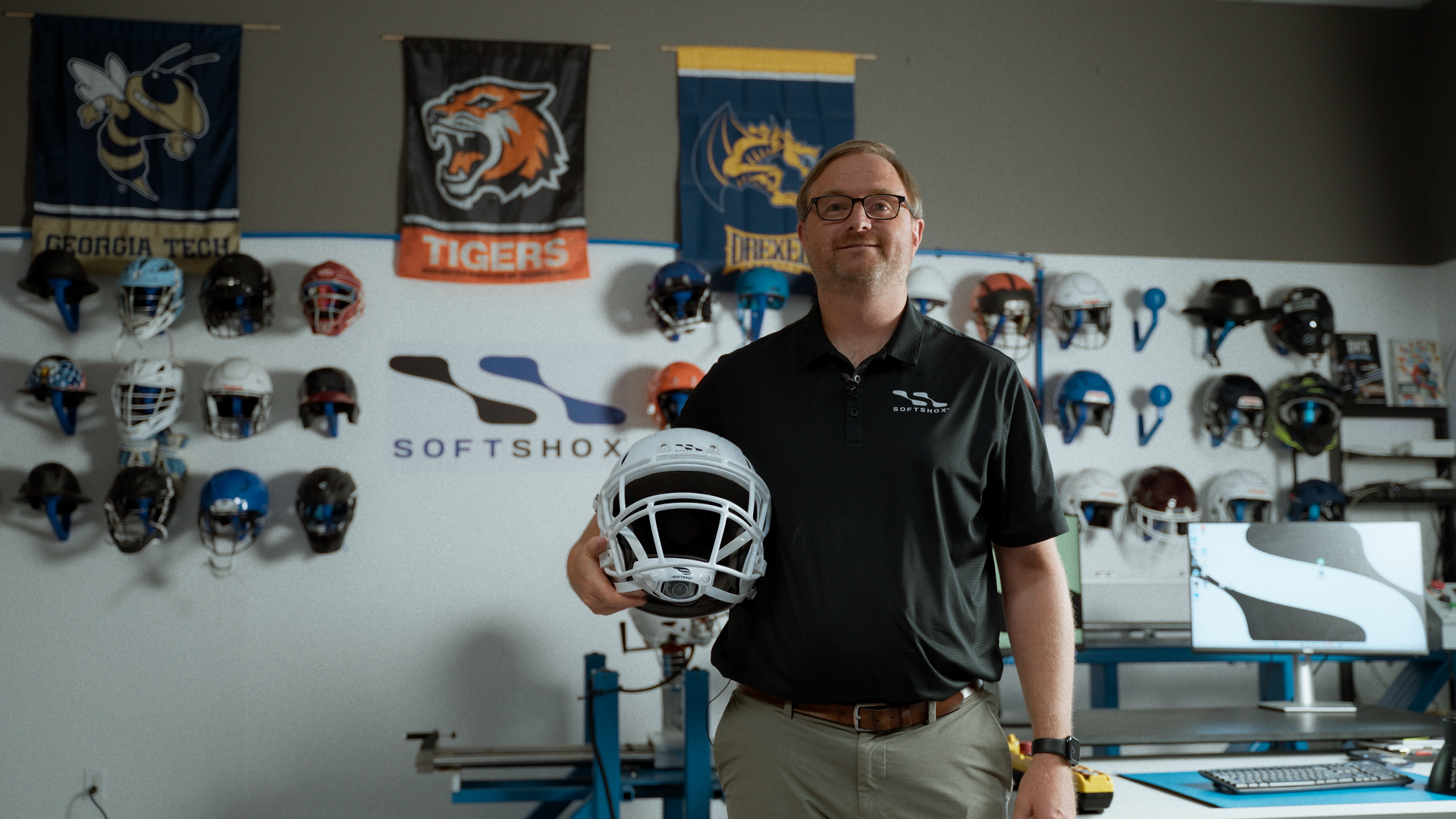
Pictured above: SoftShox co-founder Gordon Avery holds a helmet featuring SoftShox chinstrap technology in the research and development lab.
Avery attended Thomas Jefferson High School for Science and Technology (TJ) in Fairfax, where he played football and developed his interest in science and engineering. He credits his experience at TJ with shaping the work ethic, communication skills, and relationships that continue to influence how he leads his business today.
“Frankly, just being around super smart, super motivated people that are competitive and want to win and be great, really forced me to pick up my game,” Avery said.
Surrounded by ambitious classmates and encouraging faculty, Avery learned to manage his time, push himself academically, and collaborate with people who challenged him to be better. While TJ is widely recognized for its STEM-focused education, Avery credits his humanities courses with helping him build a strong foundation in communication. Reading, writing, debating and learning to communicate complex ideas helped prepare him for responsibilities that now occupy much of his time as a founder.
“One of the things I find myself doing constantly as a small business owner and a founder is telling this story and communicating things and trying to make sure I’m solving the right problem,” Avery said. Those skills have become essential as he presents SoftShox’s technology to investors, customers and potential partners, while navigating the challenges of bringing a new product to market.
The relationships Avery developed in the classroom and on the football field have also followed him into his entrepreneurial career. Two former TJ classmates now contribute their expertise to SoftShox: Ray Britt, a retired Navy commander and former high school football teammate, serves as a military advisor, helping the company explore defense applications; Bobby Atefi, a data scientist, supports the company’s technical work. “It’s fun to have these people that answer your phone, sometimes when you need them, especially when building a business, and you need all kinds of help,” Avery said.
In another full-circle moment, Avery returned to his alma mater as an entrepreneur to partner with TJ Principal Mike Mukai and the football program. SoftShox provided its football safety chinstraps to TJ and Edison High School in Alexandria for early product use, alongside collegiate and professional athletes. For Avery, giving back to his community and inspiring the next generation of innovators has been one of the most rewarding aspects of his entrepreneurial journey.
Pivoting Injury into Innovation
For Avery, the opportunity to innovate began with a fundamental question: What if protective equipment could adapt to an impact rather than simply absorb it? Most conventional helmets rely on a foam lining to absorb energy under specific impact conditions. Real-world impacts, however, vary in force, direction and frequency. SoftShox approaches the problem differently. Its patented wearable hydraulic technology is designed to adapt to different impacts, absorbing energy across a wider range of conditions. The concept applies principles similar to hydraulic shock absorbers found in automobiles and aircraft, adapted into lightweight, wearable protective equipment.
“The reality is that people are exposed to a whole range of impact conditions. And so our technology is adaptive,” Avery explained.
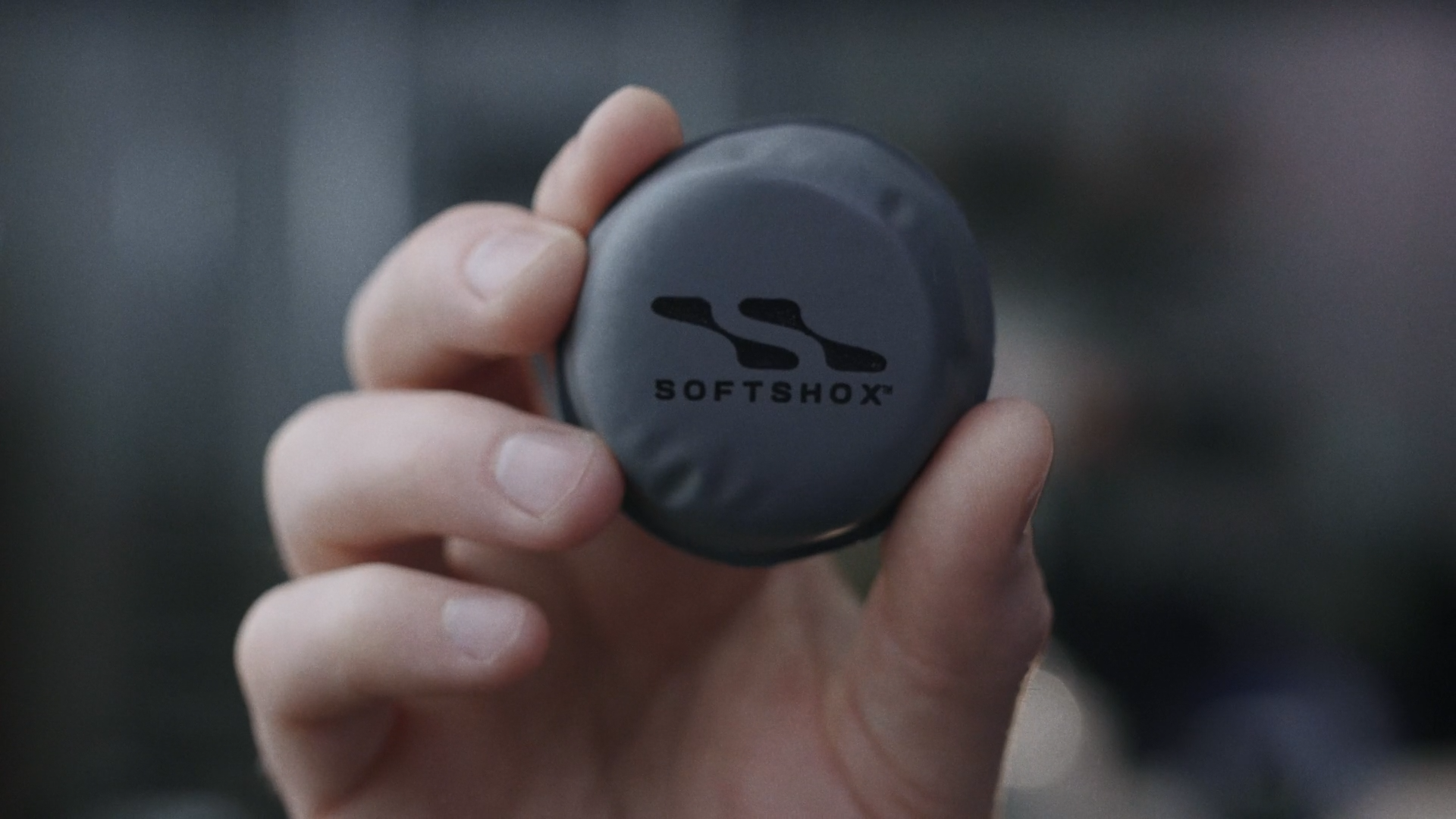
Pictured above: a close-up image of SoftShox’s hydraulic pad.
The company’s first major commercial application is a football safety chinstrap, designed to reduce forces transmitted to the head during facemask impacts. According to SoftShox’s research, its technology can reduce those forces by more than one-third under tested conditions.
“The biggest turning point was really moving from science and lab to actually seeing SoftShox in the field,” Avery said. That transition required more than scientific research. They had to develop a product that athletes could comfortably wear, that could withstand the demands of competition, and that could be manufactured at an accessible price.
Early feedback from University of Virginia football players helped SoftShox refine the chinstrap’s design, including its fit and components. The experience reinforced an important lesson in entrepreneurship: developing innovative technology is only part of the challenge. Turning that technology into a product people will use requires listening, testing and adapting.
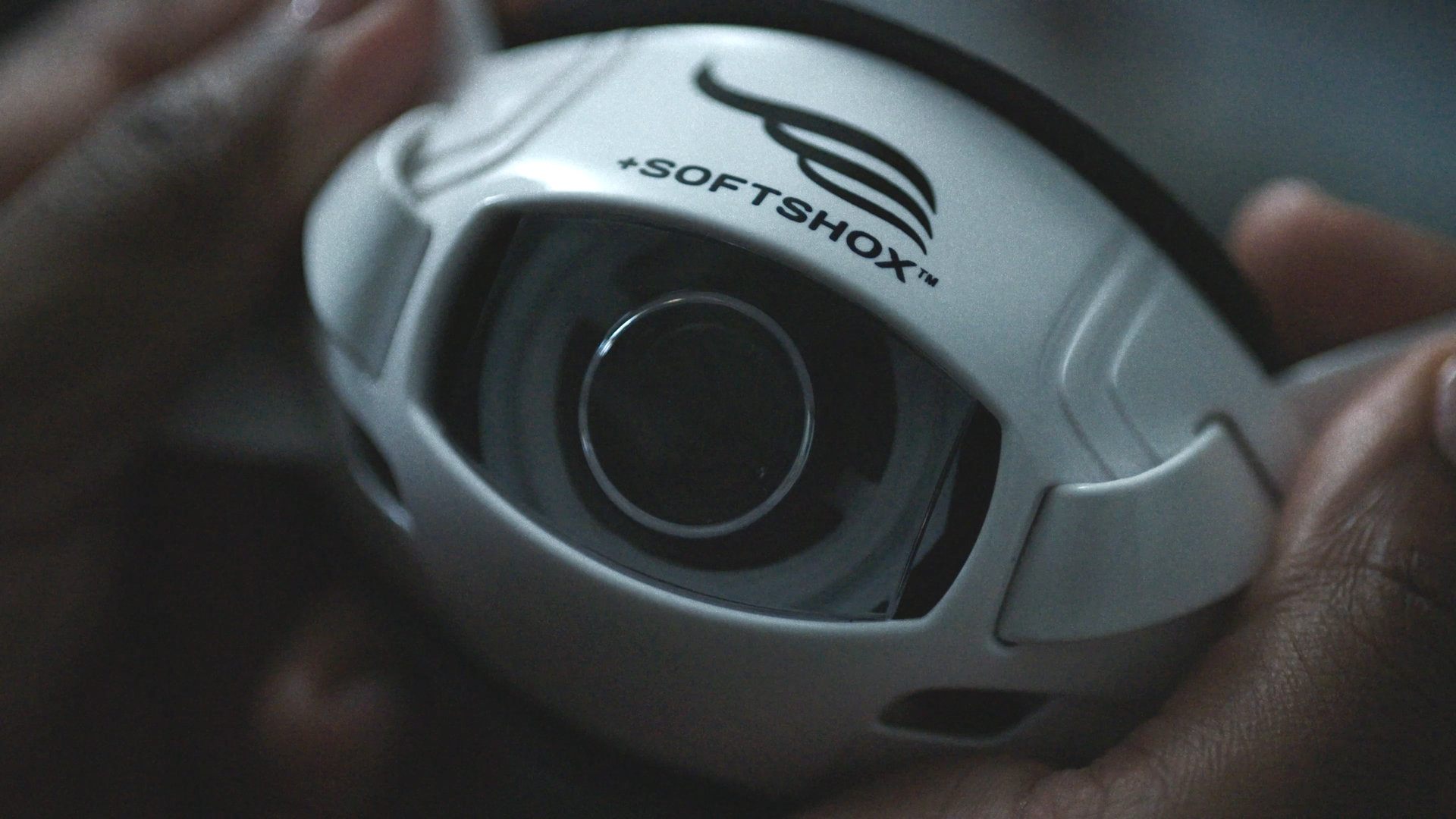
Pictured above: a close-up of the SoftShox chinstrap with the hydraulic pad technology at the center of the chin.
Why Fairfax NOVA? Building Where the Connections Are
When deciding where to build SoftShox, Avery returned to the community where he grew up and built early impactful relationships.
“When you’re building a new company, you need all kinds of things. And my personal and professional networks were here and were stronger than anywhere else,” Avery said. “It was a natural choice for building the company or at least getting started here.”
Beyond his personal network, Avery discovered advantages in the region’s specialized workforce and academic research institutions. SoftShox draws heavily on biomechanics, a field supported by research expertise at institutions including the University of Virginia and Virginia Tech. One of the company’s youngest employees, Kyle Casazza, joined SoftShox after spending two years working in Virginia Tech’s helmet testing laboratory, bringing specialized knowledge of the equipment and testing processes central to SoftShox’s work. For a growing technology company, Northern Virginia’s concentrated access to specialized talent and academic support is a crucial advantage.
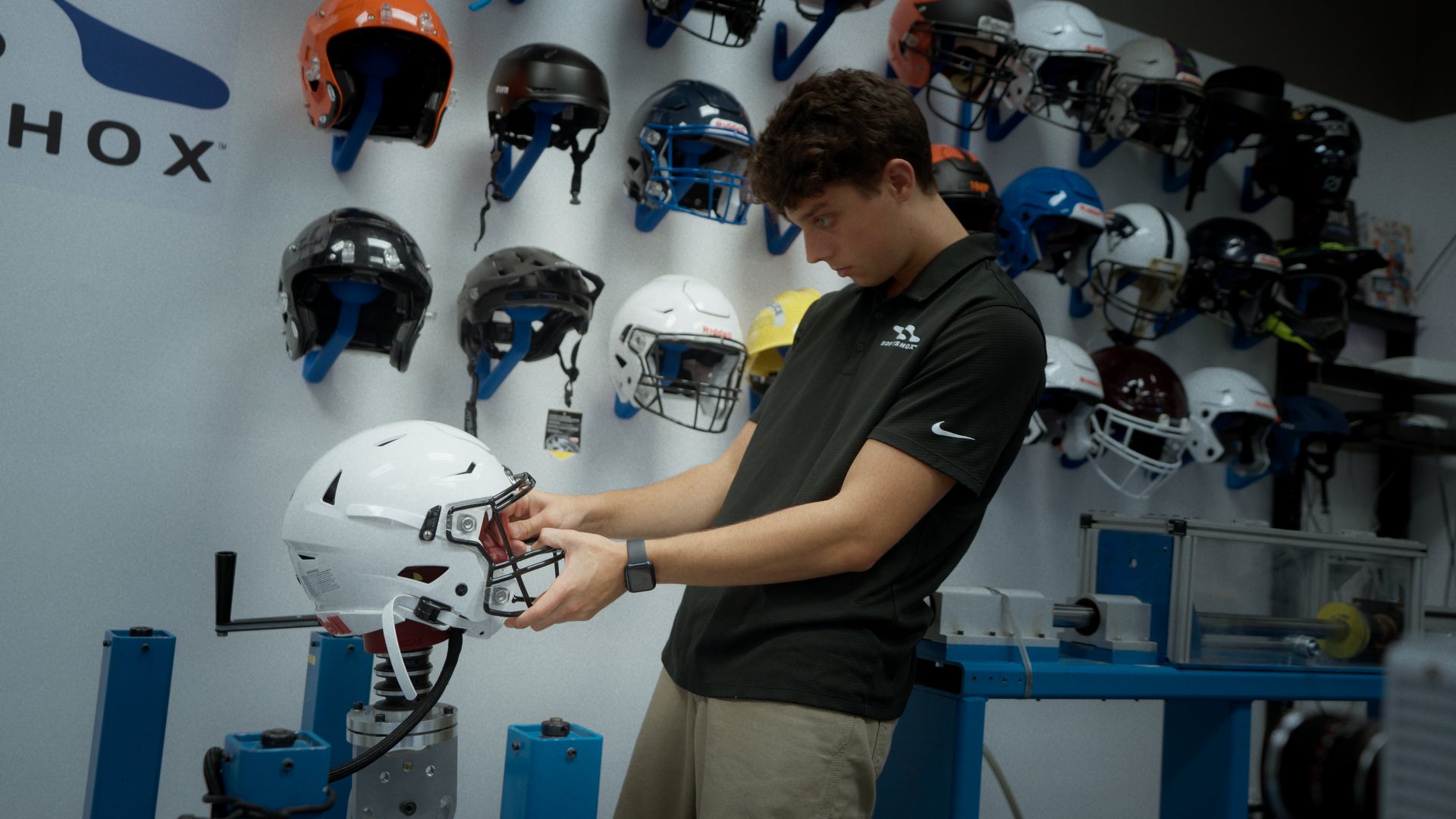
Pictured above: SoftShox Product Engineer and Virginia Tech alum Kyle Casazza demonstrates a helmet impact test.
Fairfax County’s proximity to Washington, D.C., also creates opportunities to connect with potential customers and commercial partners. Business leaders from across the country regularly travel to the nation’s capital. “What’s been the most useful is that because Washington regulates so many different companies, countries, states and people, leaders of companies that we want to talk to all end up in D.C. for some reason or another,” Avery explained. With access to both Dulles International Airport and Reagan National Airport, SoftShox can arrange in-person meetings with executives who might otherwise be difficult to reach. Those conversations, he added, have led to valuable commercial relationships.
Avery also credits the Fairfax County Economic Development Authority and regional entrepreneurial organizations with helping him connect with other founders and business leaders. Although SoftShox operates in a specialized segment of the protective equipment market, Avery sees value in learning from entrepreneurs across different industries. For founders building something outside the region’s more established technology sectors, he encourages them to embrace what makes their businesses different.
“Use [what makes your company different] to your advantage to stand apart and get someone’s attention and then be confident. Tell your story,” Avery said.
Building What’s Next
With its football safety chinstrap on the market, SoftShox is now looking toward new applications for its technology, including protective equipment designed specifically for children. The company is developing a youth football chinstrap and a children’s bicycle helmet intended to address the different impact conditions younger athletes experience. As a father, Avery has developed an increasingly personal connection to this mission. He recalls a bicycle accident involving his young daughter that illustrated the limitations of conventional helmets and strengthened his interest in improving protective equipment for children. Looking ahead, Avery hopes SoftShox will become a trusted name in protective technology across sports and other industries.
“I want SoftShox to be the premium protection ingredient that people reach for when it matters most,” he said.
From his days at Thomas Jefferson High School to his work developing new protective technology, Avery’s journey illustrates how the relationships, skills and opportunities developed in Fairfax County can continue to shape an entrepreneur’s path. As SoftShox grows, he’s drawing on those same connections to build a company focused on making protective equipment safer. For Avery, Fairfax NOVA isn’t just where his journey started. It’s where he’s building what comes next.