
Aviation &
Aerospace
Soaring above the competition
“By shifting our headquarters to the Washington, D.C. metro region, we will deepen our ties with key decision makers and stakeholders, and reaffirm our commitment to working side-by-side with our partners as they carry out our nation’s critical missions,”
Fast Facts
Projected Aerospace Industry Growth over the Next Decade (Virginia)
Virginia Economic Development PartnershipAnnual Mean Wage for Aerospace Engineers in the Washington-Arlington-Alexandria Metro Area
WageDepthSites Nationally Licensed by the FAA to Perform Orbital Launches (Mid-Atlantic Spaceport - Wallops Island, VA)
Virginia Spaceport AuthorityPrepare for Take Off in Fairfax
Fairfax County is home to world-class aerospace and aviation companies, including Boeing, Northrop Grumman, General Dynamics, and Airbus. The region’s business climate encourages collaboration across industry and government, with institutions like NASA reinforcing its status as a hub for innovation and growth. For companies looking to establish or expand their presence, Fairfax County delivers the ecosystem to make it happen.
Learn More about Aviation & Aerospace in Fairfax

Aviation & Aerospace Industry Resources
Major Aviation & Aerospace Companies in Northern Virginia
















Fairfax Is Ready to Expand to New Horizons
Aviation and aerospace companies need a business location that supports complex operations, secure connectivity, specialized talent and long-term growth. In Fairfax County, companies find the infrastructure, real estate and regional access they need to move faster, scale smarter and stay close to the partners driving the future of aerospace.
Located near Washington Dulles International Airport, Fairfax NOVA connects companies to nearly 160 nonstop destinations, making it easier to reach federal customers, commercial partners and global markets. The region also offers direct access to the Dulles Technology Corridor, one of the nation’s most established hubs for information technology, defense, cloud computing, cybersecurity and advanced research.
For companies working in satellite communications, space systems, simulation, artificial intelligence, avionics and mission-critical technologies, Northern Virginia’s digital infrastructure is a major competitive advantage. The region has one of the largest data center markets in the world, giving aerospace companies access to the computing capacity required to push the research and development of aerospace systems engineering.
Whether your company is expanding federal work, developing next-generation aerospace systems or building partnerships across the aviation and defense ecosystem, Fairfax NOVA offers a launchpad for what comes next.
Land Top Talent in Fairfax
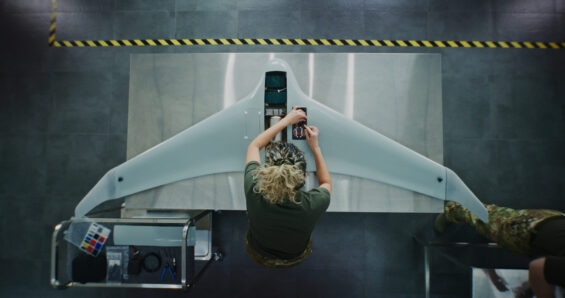
Aviation and aerospace companies depend on highly specialized talent, from engineers and software developers to cybersecurity professionals, data scientists and systems integration experts. In Fairfax NOVA, companies can tap into one of the deepest and most highly educated workforce pipelines in the country, supported by the broader Washington, D.C. region’s concentration of technology, defense and federal contracting talent.
Fairfax County is home to a workforce built for success. More than 65% of residents hold a bachelor’s degree or higher, and the region offers access to more than 6 million workers across the greater Washington, D.C. labor pool. For aerospace companies advancing satellite communications, avionics, unmanned systems, artificial intelligence, automation, simulation and national security technologies, that means the right mix of technical expertise is already within reach.
The region’s talent advantage is also strengthened by nearby colleges and universities, including George Mason University. These institutions are preparing the next generation of engineers, computer scientists, business leaders and skilled professionals needed to support growth across the aerospace and aviation industry.
Companies here benefit from a location where professionals want to build both their careers and their lives. Fairfax offers access to strong schools, diverse communities, cultural amenities, outdoor recreation and global connectivity through the region’s robust transportation infrastructure.